Course description

Objectives

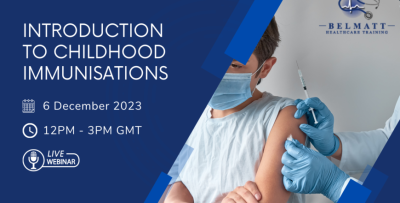
Develop knowledge and confidence in providing current information on childhood diseases and immunisation to parents/patients.

Have an awareness of the current guidelines and Department of Health’s recommendations on immunisations

Develop knowledge of   current issues and changes to the immunisation schedule .

Demonstrate safe, effective childhood immunisation care.

Learning Objectives

Develop knowledge and confidence in providing current information on vaccinations such as shingles and pneumococcal and injections including vitamin B12.

Have an awareness of the current guidelines and Department of Health’s recommendations on immunisations/vaccinations.

Develop knowledge of   current issues and changes to the immunisation schedule .

Demonstrate safe, effective injection technique.

Course Content

HCSWs and current issues in vaccinations.

Recent epidemiology of relevant vaccine preventable diseases

Current changes to the recommendations or national policy for relevant immunisations and legislature relevant to vaccination

Review of current practice and identification of areas for improvement

Review of injection practice including intramuscular, subcutaneous and intranasal routes of administration. Short webinar practical demonstration

Trouble shooting and common pitfalls.

Understanding the importance of providing accurate and up-to-date information about the relevant diseases and vaccines to patients

Consulting a registered healthcare professional when further information or action is required for the patients needs

Consider the requirement for reassessment of competency in administration of vaccines

Review recognition and management of anaphylaxis, appropriate management of adverse reactions and the requirement to undertake mandatory training in basic life support

Consider limitations of the HCSW role in immunisation and injections

Vaccines that are commonly administered by HCSWs:

• Inactivated injectable pneumococcal vaccine for adults

• Inactivated injectable influenza vaccine for adults

• Live intranasal influenza vaccine for children aged 2-17 years

• Live injectable shingles vaccine for adults aged 70 and over according to

What will i learn?

  • This course aims to improve your knowledge and confidence in providing information and safe, effective childhood immunisations.

Requirements

  • Allocate 6hours for completion of the online ELFH modules must be completed before the session and the mentor forms returned to [email protected] before the webinar. Not certificates issued until we receive completed and signed mentor forms.
  • Complete scenarios which will be given to delegates when the booking is made.
  • Have an identified mentor or healthcare professional who is appropriately trained in immunisations, to guide you to complete course competencies.
  • Quiz

Frequently asked question

Healthcare Assistants, assistant practitioners and clinical assistants who have been delegated a role in immunisation and mentored by an appropriately trained registered healthcare professional

Belmatt Healthcare Training

Kirsty Armstrong

Kirsty Armstrong is a distinguished Advanced Nurse Practitioner specialising in out-of-hours care, coupled with a significant role as a Senior Lecturer in Primary Care and Workforce Development at Kingston University and St George’s University of London. With a dedicated focus on primary care, Kirsty has made substantial contributions to the field through extensive publications and a commitment to educating future healthcare professionals. Her recent publications showcase her expertise and commitment to advancing healthcare practices. In "Debate: Should patients be charged for missing appointments?" (Nursing in Practice: Voices, 2018), Kirsty engages in critical discussions on the ethical considerations surrounding patient appointments. Another notable contribution is "The safe storage and management of vaccines" (Practice Nursing, 29(4), 2018), where she delves into the crucial aspects of vaccine safety and management.Kirsty's expertise extends to specific clinical practices, as demonstrated in "Undertaking ear assessment and irrigation" (Journal of General Practice Nursing, 4(1), 2018). Here, she imparts valuable insights into ear assessment procedures, contributing to the knowledge base of healthcare practitioners. "Safely administering and storing vaccines in the community setting" (British Journal of Community Nursing, 22(9), 2017) reflects Kirsty's dedication to ensuring the safe and effective delivery of healthcare services in community settings. Her work in this area addresses critical aspects of vaccine administration, highlighting her commitment to maintaining high standards of patient care beyond traditional healthcare settings. Kirsty Armstrong's multifaceted role as a practitioner, educator, and prolific author underscores her dedication to advancing healthcare practices and fostering the development of the healthcare workforce. Her contributions have left a lasting impact on the field, making her a respected figure in both clinical and academic circles.  

£75

+VAT

Course code

Cpd hours

Quizzes

3

Skill level

Beginner

Expiry period

Lifetime

Certificate

Yes

Related courses

Intermediate

Chronic Disease Management in Primary Care

0

(0 Reviews)

Identify and Assess Chronic Diseases: Recognize the signs, symptoms, and risk factors associated with common chronic diseases. Develop Personalized Care Plans: Create individualized treatment plans based on patients’ specific needs, preferences, and medical history. Implement Treatment Protocols: Utilise appropriate medication, lifestyle interventions, and other therapeutic modalities in line with current guidelines. Apply Preventive Strategies: Implement preventive measures, including screenings, immunisations, and lifestyle counseling. Utilise Technology in Care: Integrate health technology tools, including electronic health records and telemedicine, in patient care. Communicate Effectively: Demonstrate strong communication skills with both patients and interdisciplinary healthcare teams. Evaluate Outcomes: Assess and evaluate patient outcomes, modifying care plans as needed to achieve optimal results. Adhere to Ethical Practices: Practice with ethical considerations, maintaining patient confidentiality and dignity. Engage in Continuous Learning: Recognise the importance of ongoing professional development and evidence-based practice in chronic disease management. Navigate Palliative Care: Provide compassionate palliative care to patients with life-limiting chronic illnesses. Facilitate Community Engagement: Collaborate with community resources and support systems to enhance patient care outside of the clinical setting.

£300